The 5 Types of Dumpster Rental Companies (And How to Choose the Best One)
Choosing the right dumpster rental company in a new market can be tricky. Each provider type has strengths and weaknesses, and the wrong fit can mean missed timelines, unexpected costs, or poor communication.
As a contractor, I’ve rented dumpsters from just about every type of provider. To make this simple, I’ll use Austin, Texas as an example city, but this framework applies in any market — Denver, Dallas, Phoenix, and beyond.
Here’s a breakdown of the five main types of dumpster rental companies, what to expect from each, and when they might be the best fit.
1. National Dumpster Rental Companies
Examples in Austin: Waste Management, Republic Services, Waste Connections, TDS, Recon.
✅ Pros:
Massive fleets and coverage
Full range of container sizes
Strong compliance systems (good for regulated or special waste)
❌ Cons:
Long hold times (45+ minutes isn’t unusual)
Delivery windows span days, often missed
Impersonal, call-center style service
Less flexibility for jobsite-specific needs
🔨 Best for: Developers or GCs on huge, predictable projects where volume and compliance matter more than personal service.
2. Small Local Dumpster Companies
These are often one-man operations or very small teams with a limited fleet.
✅ Pros:
Usually the cheapest option
Flexible if available — sometimes same-day delivery
Direct communication with the owner
❌ Cons:
May lack proper insurance
Often unreliable for large projects or multiple cans
Billing and scheduling may be pen-and-paper (not software-driven)
Can feel like a side hustle instead of a professional service
If the operator is busy or out, everything stops — billing, scheduling, delivery
🔨 Best for: Homeowners or small contractors doing remodels, roofing jobs, or clean-outs where low cost outweighs operational reliability.
3. Formerly Local, Now Acquired
These are companies that started local, built strong relationships, and were later acquired by larger operators — examples include Atex, Hook-N-Haul, Rockin’ Disposal, AUSTEX.
✅ Pros:
Familiar local names and staff may remain
Often gain additional resources after acquisition
❌ Cons:
Prices usually increase immediately after buyout
Less leniency — focus shifts to corporate profitability
Relationship-driven service often fades
Long-term loyalty isn’t as valued
🔨 Best for: Customers who value the brand recognition, but don’t rely on flexibility or personal attention.
4. Franchise Dumpster Rental Companies
Franchises are locally owned and operated but backed by national branding and marketing. Think Vavia, Bin There Dumped That, BinDumped.
✅ Pros:
Local ownership + national polish (professional websites, smooth booking, polished operations)
Trucks and dumpsters sized for driveways and residential areas
Strong online presence and easy to find
❌ Cons:
Typically only offer smaller dumpsters (10, 12, 15, 20 yards)
May have stricter policies than independents
Focused more on residential and light commercial than large C&D projects
🔨 Best for: Residential projects and small contractors in neighborhoods where driveway-friendly service matters most.
5. Mid-Sized Local Dumpster Companies (The Contractor’s Sweet Spot)
These companies are the ideal balance for contractors. They usually operate 10+ trucks and 500+ dumpsters, with proven processes, correct insurance, and professional teams.
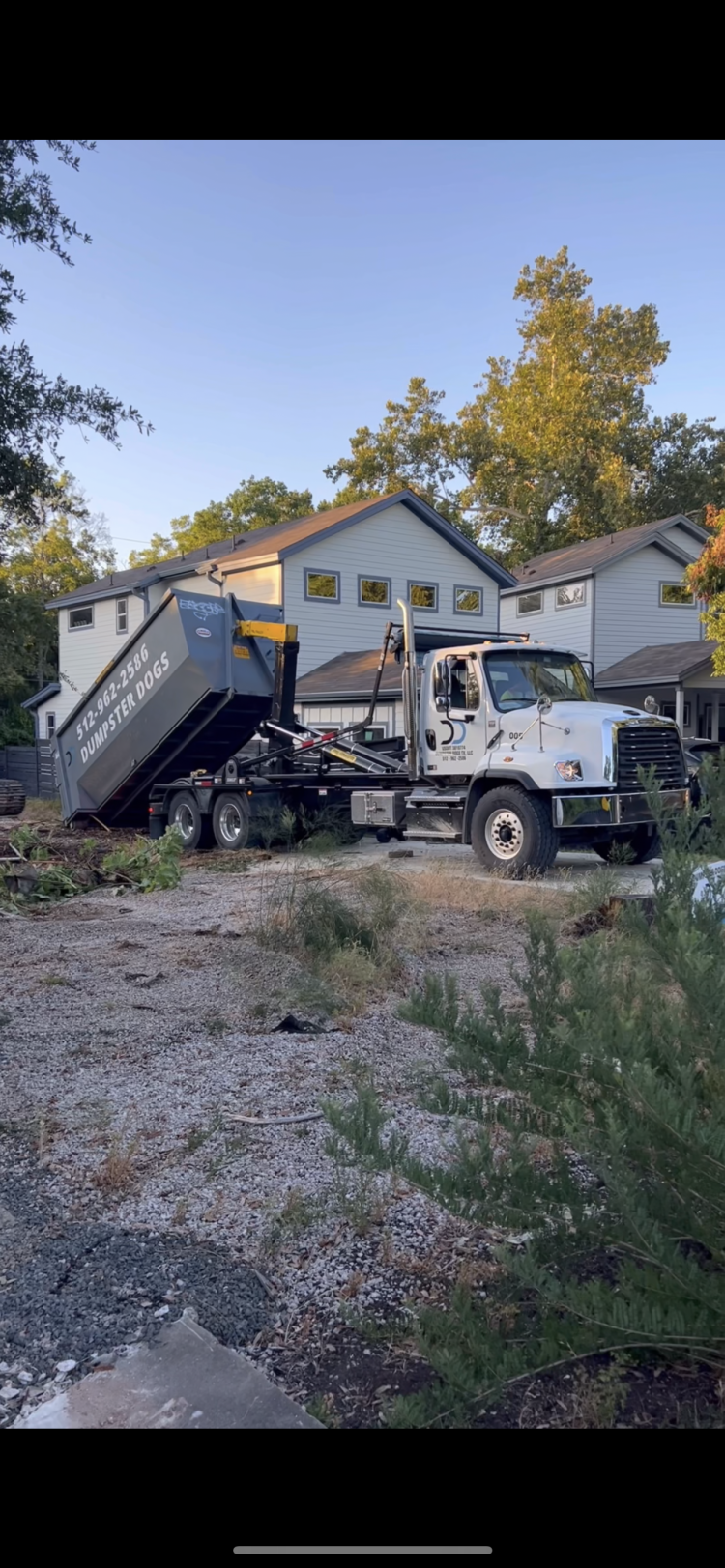
Examples in Austin: Dumpster Dogs, Grime Time, Captain Hook, Arrow, Modern Waste.
✅ Pros:
Same-day or next-day service
Real people answer the phone — not call centers
Big enough to be efficient in routing and operations
Proper insurance and professional systems in place
Still value relationships, reliability, and accountability
❌ Cons:
Cannot control landfill pricing — nationals can occasionally run specials with more tons included
Must stay disciplined with operations and ratios to keep service high
🔨 Best for: Contractors, builders, and demo crews who need reliable service, multiple cans, and fast turnaround.
Dumpster Rental Company Comparison Chart
| Provider Type | Pros | Cons | Best For |
|---|---|---|---|
| Nationals | Scale, compliance, full size options | Long waits, impersonal, missed timelines | Large, multi-site projects |
| Small Locals | Cheap, flexible, personal | May lack insurance, side hustle feel, unreliable | Small jobs, homeowners |
| Formerly Local/Acquired | Familiar names, added resources | Higher pricing, less leniency, relationships fade | Brand-loyal but low urgency jobs |
| Franchises | Local feel + national polish, driveway-friendly | Smaller sizes only, stricter policies | Residential, small contractors |
| Mid-Sized Locals | Reliable, efficient, relationship-driven | Landfill pricing outside their control | Contractors, builders, demo crews |
Contractor’s Takeaway
No matter what city you’re working in — Austin, Denver, Dallas, or beyond — you’ll see these same five categories.
Nationals: Best for massive, predictable projects
Small locals: Cheapest for single, small jobs
Formerly local/acquired: Familiar names, but less relationship-driven
Franchises: Polished, driveway-friendly, great for residential
Mid-sized locals: The contractor’s best choice — reliable, efficient, professional, and still relationship-focused
✅ Bottom line: Every type of dumpster company has its place, but for most contractors, mid-sized local providers deliver the best mix of reliability, speed, and accountability.